Sep 3
Americans everywhere have the same anti-aging concerns
Sorry we haven’t blogged in a while. We have just finished a tour of Las Vegas and New Mexico including a conference and consultations with patients. What was interesting to us was the similarities we see among patients’ desires and fears related to surgery. We have both practiced in big cities on both coasts but we have never had the pleasure of consulting with patients in the smaller cities of this beautiful desert country.
We talked to people who were generally well-informed and who had a great deal of interest in the latest and greatest in plastic surgery. Like our patients here in LA, they have justifiable doubts about some of the less invasive procedures that make over-the-top claims in the media. Some have had a Lifestyle Lift elsewhere and have been sorely disappointed. Most all spoke of wanting to look natural and of fearing an overdone appearance. All of them were very willing to consider surgical procedures to achieve their goals. Mostly, they were in need of doctors who would tell the truth about what they could expect from today’s surgical anti-aging procedures.
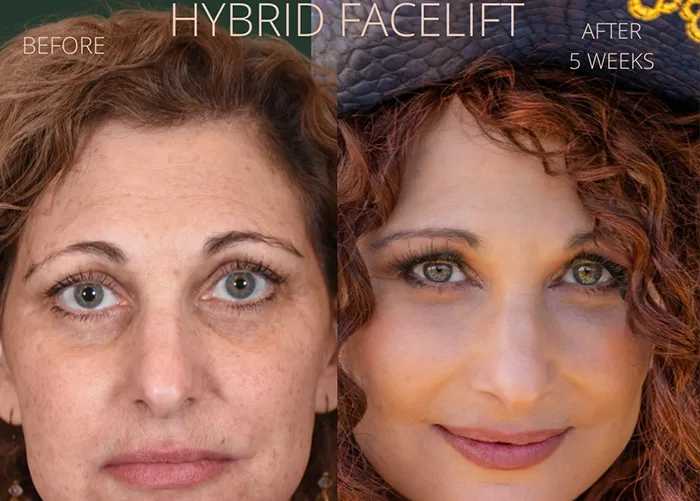
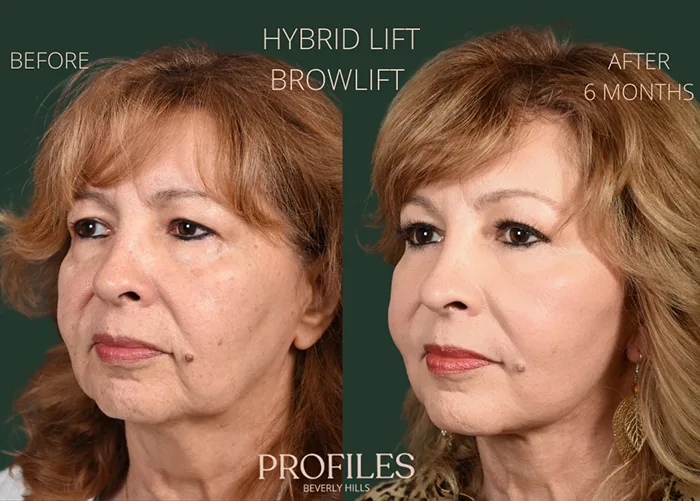
What we did not expect was the level of sun damage that a majority of patients exhibited. We probably shouldn’t have been surprised since many people in these areas spend much of their work and leisure time in the great outdoors. But, most also confessed that they did not use sunscreen at all, let alone effectively. As a result, we saw a lot of premature skin aging and most patients had had early precancerous lesions scraped or burned off. Many of these sun-related changes such as fine wrinkling, brown spots, and thickening can be treated really well with a series of peels, such as the ViPeel or Blue Peel, along with lifting and volume enhancing procedures such as our new Hybrid Lift to treat sagging skin.
But, the most important thing you can do is to protect your skin from the sun in the first place. We’re good about sun protection, yet UV-filtered photos of ourselves still show a fair bit of accumulated sun damage. So, we spent a lot of our time lecturing about sun protection. Avoidance of sun in the mid-day hours, wearing protective layers, and using a SPF 30 or greater sunscreen liberally and often (especially after water exposure) are all sensible things everyone should do, regardless of skin type. If you want to take skin anti-aging to the next level, then use of a good skin care regimen that incorporates antioxidants and bleaching agents can give your skin a healthy glow that you haven’t seen since grade school. Check out our website for more details.
No commentsAug 14
Some non surgeons would have you believe that surgery may actually cause you to age faster- Don’t buy the spin!
Welcome to the no spin zone: no, you have not found your way to the O’Reilly blog, however when we read a recent article in the Daily Mail-UK we couldn’t help but wonder why these things would be reported in a newspaper. Do they actually research or do they decide a story they want and then find a number of people who will agree with them?
The story begins by telling us that the popularity of facelifts and anti-aging/ facial rejuvenation surgery is growing year after year, but then takes an abrupt turn by quoting a number of “cosmetic doctors,” who happen to have non surgical cosmetic practices (comprised of fillers- juvederm, restylane, perlane- and botox) who believe that surgery is bad. What a surprise.
If you have been reading our blogs, especially those regarding the Hybrid Lift, you know by now that our Beverly Hills facial plastic surgery practice is dedicated to bringing natural looking results, and this means that we are strong advocates of a balanced approach utilizing volume enhancement, i.e. fillers, and lifting procedures in concert.
We recognize that potential patients are constantly bombarded by spin and hype from competing physicians and corporations [Allergan- Botox, Juvederm; McKesson- Restylane, Perlane, Myobloc; Artes- Artefill; Bioform- Radiesse, to name a few] and it is important for doctors to be advocates for their patients (not the corporation), so they can honestly explain all the risks and benefits of every available procedure. This is perhaps most important in plastic surgery and cosmetic surgery where we are talking about elective procedures.
The truth is that surgery works brilliantly when done correctly and for the right reasons. Let’s face it, if you have sagging skin and jowling, fillers are not the answer, though they may play a part. On the other hand, if you have hollowing in the cheeks or under the eyes, volume enhancement with a skin pinch may very well be better than traditional blepharoplasty (eyelid surgery). The key is understanding the difference between what a mini lift (lunch time lift) can do and how long it lasts as opposed to a lift that involves the deeper tissues.
Does anyone really believe you can correct these wrinkles by just filling under the skin without making this face look completely different?
We believe that for facial rejuvenation to work that lifting and volume must be coupled. Volume enhancement, for us, has come to mean fat, because some of it will last permanently and, perhaps more importantly, it is natural and safe. We remind you that none of the fillers to date have FDA approval outside the scope of the nasolabial folds (and perhaps lips but we have to check on that). As far as surgery, mini lifts occasionally are indicated, but we have found that patient satisfaction and long term results really depend on addressing the underlying, descending tissue (the SMAS).
The point of all this is that the story begins by telling us how the number of women and men having anti-aging surgery is growing rapidly. There is a reason for that: when it’s done correctly, it works.
No commentsAug 11
What the HYBRID LIFT Does, that the “New New Face” misses
Reading the New York Magazine we came across an interesting article that goes over a “new” phenomenon among New York’s higher echelons that involves volume enhancement using fillers and occasionally fat to restore the lost volume that many patients experience as they grow older. The article goes on to highlight a number of dermatologists and facial plastic surgeons in New York that are on the forefront of the phenomenon there.

Composite picture of Demi Moore, Angelina Jolie, Madonna, and Michelle Pfeiffer courtesy of the New York Magazine showing the natural aesthetics which are ideal when volume enhancement and facelifts are combined such as in the HYBRID LIFT
As we read the very well-written article trace the history of facial aesthetics and volume enhancement, we could not help but notice that many of the doctors and quotes noted that as patients age there is a descent of tissue, sagging of skin, wrinkles and jowling, but then they glossed over the fact that volume enhancement alone fails to correct all of these issues. The idea that adding fillers or fat can correct jowling and redundant skin is simply not true.
We don’t normally like to brag here on the post, but in this one instance we hope you permit us a minute to gloat over our HYBRID LIFT. What we do for our own patients is a minimal incision deep facelift—this is tailored individually depending on how much skin descent and jowling there is—and then add the patient’s own fat back (as in the “new new face”) to recreate the volume so many patients lose as they age. The aesthetic results have been fantastic and our patients love that they can be up and around after only a few days.
While we respect the claims in the article and are proponents of volume enhancement, we find it disingenuous to claim that by replacing volume you can somehow correct the tissue and skin which descends with time. The problem is that too many people with hammers begin to see everything as nails.
The key points of our HYBRID LIFT are:
1. By doing a deep lift we are able to first replace the patients’ own fallen deep tissue (the SMAS) back into its proper position
2. By using a minimal incision, we never get into the hairlines, move hair tufts, or get a windswept appearance
3. Unlike mini lifts, because we do the work in the deep layers; the results last
4. By then adding fat and restoring volume, we fill out the concavities that lead to an aged appearance and we restore the youthful heart-shaped face that people are drawn to
5. By using your own fat, we are confident that the results last and are natural. Temporary fillers unfortunately are just that: temporary. Permanent fillers are all too often not tested for safety in these other areas, are not approved for these uses by the FDA, and are used in “off- label” procedures whose safety is unclear.
For us, the HYBRID LIFT represents the culminant evolution of facial rejuvenation. Stay tuned for the HYBRID LOWER EYELID LIFT…
No commentsJul 29
“There’s nothing wrong with you!” How to talk to your family about cosmetic surgery
Here’s a typical scenario. You’re considering facial plastic surgery to take care of a bump on your nose, a droopy tip, or a sagging jaw line. The feature may be subtle, but it’s definitely there. And you’ve been thinking of doing something about it for so long.
You’ve finally worked up the courage to tell your husband/mother/sister/brother/best friend (insert loved one here) about it and, instead of uncompromising support, you hear something like “Your nose is fine. Why would you mess with it?”. Other reactions are “Whatever makes you happy, honey” or, “I was wondering when you were gonna take care of that honker”. But, the overwhelming #1 reaction is the first one.
You’re crestfallen. You start to second guess yourself. You think “I’m not imagining this. There is a noticeable bump on my nose. Why doesn’t anyone else see it?”. Well, the answer is, they do and they don’t. They can see the feature you’re pointing to just as well as you can. The human eye is capable of incredible feats. Our eyes can discriminate between two objects down to 1/25th of an inch or about 1 mm. So, if we show you a photo of your nose and another photo with your bump shaved down just one millimeter, you’ll be able to see the difference every time. And, we all also have a built-in, hard-wired aesthetic sense of proportion, symmetry and ‘belonging’ness when we compare one feature to the rest of the whole. So, they know deep down that the bump is there.
But, your family or friends may not “see” what you’re talking about because they don’t wish to and they don’t attach the same level of importance to it as you do. They care for you as you are, as they should. And, they’re afraid for you. Afraid of the risk, even if it’s very small. And, afraid that you’ll change too much. After all, you may want a subtle change or a dramatic change, but they don’t necessarily see what you see.
Some of our patients who are REALLY close to family and friends and look to them for advice are really freaked out by this. We’ve even had a few patients recently who’ve nearly psyched themselves out of their decision. The important thing here is not to try to force your loved one to feel about your proposed surgery the way you do. Family are never quite as enthusiastic as you may be. Instead, you should let them know how important this decision is to you, and how much better you’ll feel if you have a positive outcome. That will often turn them around because what’s important to you is often what’s important to them. The decision to have surgery is a very personal one and is ultimately yours. You can reassure them that, if you’ve chosen the right surgeon, your results will look natural and won’t remove your identity.
What’s interesting is that the most resistant family member or friend is usually your most astonished and glowing supporter after the surgery once they see how happy you are with the change. This is just something to consider when you sit down to have “the talk”.
No commentsJul 21
Thread-lifts: Do they really work?
We’ve had doubts for a long time about the effectiveness of thread-lifts for revitalizing the face. For those who don’t know, this procedure involves a bunch of barbed sutures or threads that are placed under the skin under local anesthesia to lift sagging brows, cheeks, and necks.

That just doesn’t make sense to us. You can’t expect a thread to do what a real lift should without pulling through the tissues over time. More involved lifts work because the sagging tissues are widely lifted away from underlying tissues and allowed to reheal in a new desirable position. Thread-lifts aren’t even anywhere near the same ballpark. The threads can’t support the weight of the tissues and when they break and fragment, a whole host of problems can arise.
It’s one thing for guys who don’t like the idea and who’ve never used them to trash these threads. But, when docs who embraced the technique start raining on the parade, that’s a reason to take notice. In the latest issue of Archives of Facial Plastic Surgery, a report on thread-lifts by an experienced surgeon indicated that a whopping 30 out of 75 patients treated experienced a complication. In 14 patients, the thread was extruding, meaning it was popping out of the skin! They all required procedures to repair or remove the thread. Three patients needed threads removed for visible puckering or dimpling of the skin. Another 17 patients on top of that were unhappy with the result and had to undergo repeated or alternate procedures to achieve the change they were hoping for. Even in the patients who didn’t have a problem, the surgeon wasn’t impressed with the longevity of the results and has stopped offering the procedure.
Sounds like he’s not the only one. Recently, at least 1 manufacturer has removed their thread product from the North American Market. Are we finally hearing the death knell of this overhyped procedure? We think so. It’s about time plastic surgeons got back to procedures that work, even if their names aren’t on them…
1 commentJul 15
Will Botox Be Replaced by “No-Tox”?
With the growing trend toward more permanent results, we are surprised that more than 6 months after receiving FDA approval, Glabella Furrow Relaxation(GFX), or “No-Tox”, has received little hype.
The minimally invasive procedure uses radiofrequency thermal energy to “shock” the nerves that allow you to frown (and only those nerves, avoiding the all-over frozen look that many women are scared of when considering Botox). The results appear to last at least 2 years, and essentially replace those painful Botox shots between the eyes. Of course that doesn’t mean no more Botox because the procedure is only for the frown lines and does not replace Botox in other areas, such as around the eyes.
GFX sounds like an ideal alternative for those who get Botox routinely or those too scared of being injected with a toxin. There are, however, two drawbacks:
1. Only two doctors in the entire United States are performing the procedure right now, and…
2. For the $2000-3000 price tag, you may be able to just get a brow lift.
2 commentsJul 8
Is Health Care in Canada really better??
Happy Fourth of July!!!
We don’t write that often about larger political issues as they relate to Medicine. In honor of American Independence Day, we thought we’d say something positive about America. I want to thank Dr. Rob Oliver for bringing my attention to an article from the Investor’s Business Daily about the awful state of Canada’s health care system. Canada’s socialized health care is often compared to its counterpart in the US, usually by someone who would like to see the same sort of system here. Take the movie Sicko, for example, which held up Canada’s system as the shining beacon for us all to look towards for inspiration.
The article quoted one of the father’s of the Canadian system talking about its ruinous state and advocating for some privatization. The article mistakenly referred to Claude Castonguay as the architect of Canada’s socialized medicare when, in fact, this distinction belongs to Tommy Douglas who, while Premier of Saskatchewan in the early 1960’s, instituted a number of government interventions into the corporate and medical world. These changes have influenced the self-perception of Canadians until this day, and many do still see Canada as a kinder, gentler nation for it. To give you an idea of how much Canadians have thought of these events, they recently voted Tommy Douglas as ”The Greatest Canadian” of all time in a nationally-televised contest.
Having lived and worked in both systems, I’ve had a unique opportunity to see both in action. The US system’s treatment of the underinsured is without a doubt less than ideal, with most having poor access to preventive care and using the ER as a walk-in clinic. I was amazed though, when I was training in New York, that even patients with Medicaid could walk-in same-day and see a specialist without a referral. That kind of thing doesn’t EVER happen in Canada. Wait lists to see a specialist can range from weeks to months. If you don’t have a family doctor to refer you, you might be out of luck because they’re hard to find these days. And access to highly specialized testing, treatments and surgery is far slower than it is here.
In Canada, the system is far more equal for all…not completely, mind you. A whole underground network has evolved where favors and influence can move someone up the list, known as ‘jumping the queue’. The costs are contained (somewhat) by rationing services. My most memorable run-in with the Canadian system was when a surgery I had scheduled was cancelled by the hospital because I ran later than expected with my previous case which, in turn, had been bumped by a slash wound neck trauma that I had been dealing with the night before.
It devastated me to have to come out to the patient waiting room at 3 in the afternoon to break it to this poor woman that I was sorry she had been left starving all day, and that she would have to wait weeks longer for a necessary surgery that had taken 4 months to schedule in the first place, even though I was more than willing to proceed. My hands were tied. She swallowed the bitter pill quietly. What choice did she have? And that was the breaking point for me. I’m not sure any American would put up with that, or even knows that this goes on.
That type of event symbolizes for me the differences between Canada and the US. Canada is like the friend who says “Sorry you’re hurt, hope you feel better”….kind, but passive. The US is more likely to say “What are we gonna do about it?”….headstrong, but taking action. If you ask Americans, theirs is the greatest country in the world. Canadians?? Same thing. Neither one has a perfect answer to Medicare in the modern age.
If you ask me, I don’t trust pencil pushers on either side of the fence, government or private. Private medicine has its problems, but don’t count on politicians to ride in and save the day with universal healthcare! Anything that’s completely free loses its value, gets taken for granted, and ultimately gets thrown away like a wet rag, as I saw in Canada. I found it interesting that the number of patients we saw in New York for the sniffles and other frivolous visits went down by 60% when a small $2 co-pay was instituted. So, if every doctor and patient takes personal responsibility for how we use the system, we could save a lot of money and a lot of wasted air-time, and still take care of those who need it.
Rant over. Just one opinion of a cross-border doctor. Easy for me to say, I do elective surgery most of the time…
No commentsJun 27
Cosmetic Makeovers
We are constantly on the lookout for interesting stories about Beauty as it relates to Plastic Surgery. There are many beauty sites out there that specialize in repackaging information without adding much to it. So, when we find a site that doesn’t trot out that same old format, we like to make mention of it. One blog that breaks the mold is Cosmetic Makeovers. Meg Wilson provides the perfect combo of fun and thoughtful commentary on everything from cosmetics and fashion news to the latest surgical procedures. Meg’s terrific blog has our seal of approval.

Jun 20
Who is doing Facial Plastic Surgery?
There was an interesting article in the New York Times yesterday by Natasha Singer about the effect of the economic slump on Plastic Surgery. After all, you would think, with a “luxury item” like plastic surgery, how can it not be tied to the economic cycle?
And, sure enough, when Ms. Singer called around to all of the “top Plastic Surgeons” in major cities (if being on TV makes you one of the top plastic surgeons), the wait list to see the surgeon or to book a surgery date was shorter than it has been for a long time. This was the main thrust of the article.
Worse yet, according to the Times, are the recent 2007 statistics which supposedly show that actual facial surgical procedure numbers are down everywhere in favor of non-surgical procedures like Botox or dermal fillers because, so the argument goes, people just can’t afford surgery.
Funny thing is these stats are compiled by the American Society of Plastic Surgeons, which represents only General Plastic Surgeons in the US. So their numbers show a 64% increase in breast augmentation and a whopping 137% increase in tummy tucks since 2000, yet there were double digit declines for facial plastic procedures being done by general plastic surgeons.
HOW DO WE EXPLAIN THAT?
Well, that is the most interesting thing about the article. You just have to read carefully because they only briefly touched on it.
The fact is that people aren’t having body surgery in record numbers and simply avoiding facial surgery. Not at all. Facial plastic procedures are keeping pace, only it’s not the General Plastic Surgeons who are doing them any more. Facial plastic procedures, including nose jobs (rhinoplasty), facelifts, forehead lifts, and eyelid tightening (blepharoplasty) procedures are simply being done by Facial Plastic Surgeons, not general plastic surgeons.
You need only look at other statistics compiled by the American Academy of Facial Plastic Surgery, our professional organization, to see the other side of the story. According to them, the average number of eyelid lifts performed per surgeon was up 11% over 2 years earlier while forehead lifts were up 29%. To top it off, Facial Plastic Surgeons, on average, each did 79% more facelifts in 2007 over 2005. That’s more than increases in Botox and Fillers combined.
So, facial plastic surgery isn’t going the way of the Dodo. Just the opposite, gains in these procedures are outstripping many of the more publicized non-surgical procedures. Why?? Because they work. And people are coming around to that realization, and they’re also figuring out that super- specialists in the face (facial plastic surgeons) are the ones they trust to work on their faces.
No commentsJun 18
Plastic Surgery 101
As we surf the web to find all the hype that surrounds Plastic Surgery, we occasionally come across some very thoughtful and insightful editorial commentary. One of the sources we look to as inspiration are the musings of Dr Robert Oliver, who is a Plastic Surgeon in Birmingham, Alabama. Dr Oliver focuses his writings on breast augmentation and reconstruction, but talks on a variety of topics from liposuction to legislation regarding medicine, and really helps in debunking some of the gimmicks surrounding plastics.

Plastic Surgery 101 has our Seal of Approval
1 comment